The Ultimate Guide to Modern Bulk Handling Systems
Efficient bulk material handling is essential for industries that transport, store, load, or unload large quantities of loose materials. Whether you’re operating a mining site, grain terminal, cement plant, recycling facility, biomass plant, or port, the right bulk material handling equipment can dramatically improve productivity while reducing labor costs, downtime, and material loss.
Modern facilities no longer rely on a single machine. Instead, they integrate multiple types of equipment into automated systems that move materials safely and efficiently from receiving to storage, processing, and shipment.
This guide introduces the major types of bulk material handling equipment, explains how they work, compares their advantages, and provides practical advice for selecting the right solution.
What Is Bulk Material Handling Equipment?
Bulk material handling equipment refers to machinery designed to transport, store, load, unload, stack, reclaim, and process dry bulk materials.
Unlike unit load handling, which deals with boxes or pallets, bulk handling systems manage loose materials such as:
- Coal
- Iron ore
- Copper concentrate
- Limestone
- Sand
- Gravel
- Grain
- Fertilizer
- Plastic resin
- Salt
- Cement
- Fly ash
- Wood chips
- Biomass
- Scrap metal
These materials are typically moved continuously through conveyors, storage systems, trucks, ships, railcars, or shipping containers.
Why Bulk Material Handling Equipment Matters
An optimized material handling system provides benefits far beyond simply moving materials.
It can:
- Increase production capacity
- Reduce loading and unloading time
- Lower labor costs
- Improve workplace safety
- Reduce dust emissions
- Minimize product damage
- Improve inventory control
- Lower energy consumption
- Support automated operation
- Reduce overall operating costs
For industries handling thousands of tons every day, even small improvements in efficiency can generate significant annual savings.
Main Types of Bulk Material Handling Equipment
1. Belt Conveyors
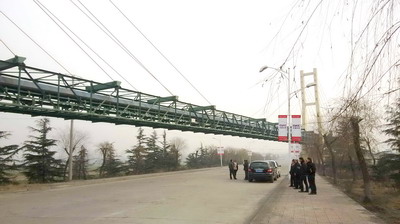
Belt conveyors are the most widely used bulk handling equipment worldwide.
They continuously transport bulk materials over short or long distances using an endless belt supported by rollers.
Best Applications
- Mining
- Ports
- Grain terminals
- Cement plants
- Aggregate production
- Fertilizer plants
Advantages
- Continuous conveying
- High throughput
- Low maintenance
- Long conveying distance
- Energy efficient
Limitations
- Requires fixed installation
- Less flexible than mobile equipment
2. Screw Conveyors
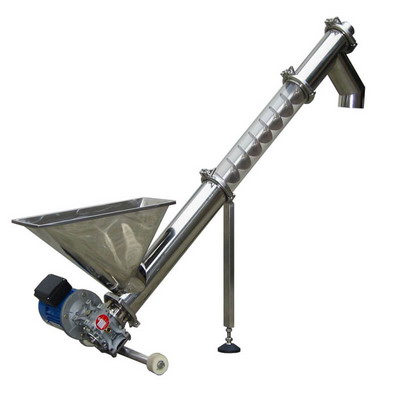
Screw conveyors use a rotating helical screw inside a tube or trough to move bulk materials.
Ideal Materials
- Cement
- Flour
- Lime
- Plastic pellets
- Fly ash
- Chemical powders
Advantages
- Enclosed design
- Excellent dust control
- Compact footprint
- Low installation cost
3. Bucket Elevators
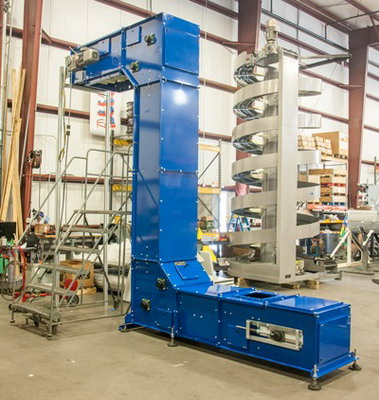
Bucket elevators move materials vertically.
Attached buckets collect material at the bottom and discharge it at the top.
Common Applications
- Grain storage
- Feed mills
- Cement plants
- Fertilizer production
- Mining
Advantages
- High lifting height
- Small footprint
- Continuous operation
4. Vibrating Feeders
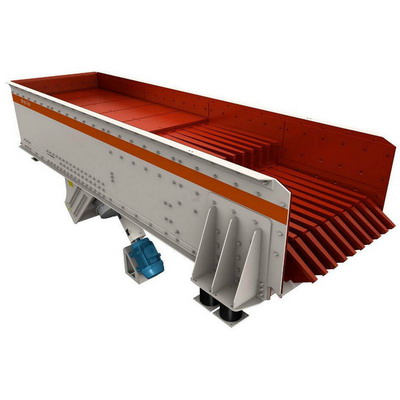
These machines regulate material flow into downstream equipment.
They provide consistent feeding for:
- Crushers
- Screens
- Conveyors
- Mills
Benefits include improved production stability and reduced equipment wear.
5. Apron Feeders
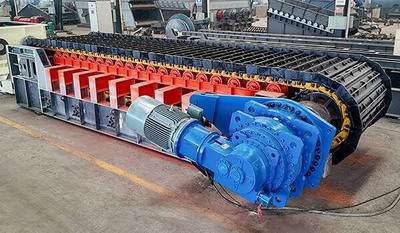
Apron feeders are heavy-duty machines designed for large, abrasive materials.
Typical applications include:
- Iron ore
- Copper ore
- Limestone
- Quarry operations
Compared with vibrating feeders, apron feeders handle larger rocks and heavier impact loads.
6. Stackers
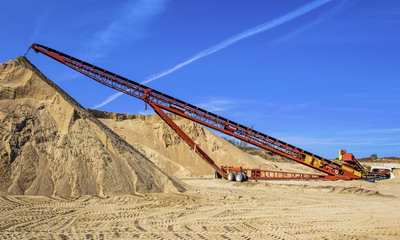
Stackers automatically create stockpiles.
Instead of relying on wheel loaders, stackers distribute material evenly while maximizing storage capacity.
Industries include:
- Coal terminals
- Iron ore yards
- Grain terminals
- Cement plants
7. Reclaimers
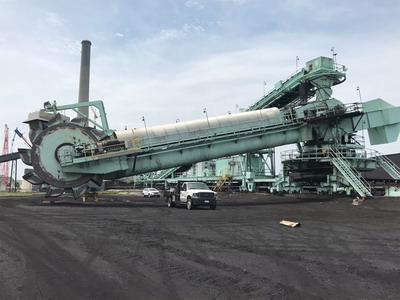
Reclaimers recover stored materials from stockpiles.
Common types include:
- Bridge reclaimers
- Portal reclaimers
- Bucket wheel reclaimers
- Circular reclaimers
They enable continuous production while minimizing manual handling.
8. Ship Loaders
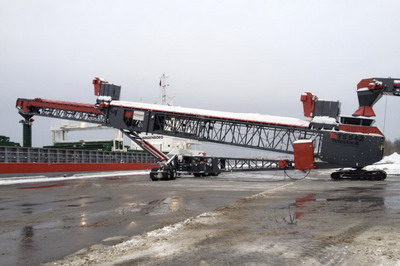
Ship loaders transfer bulk materials from conveyors directly into cargo vessels.
Frequently Loaded Materials
- Coal
- Grain
- Iron ore
- Biomass
- Fertilizer
- Salt
Modern ship loaders often include telescopic chutes and dust suppression systems to reduce environmental impact.
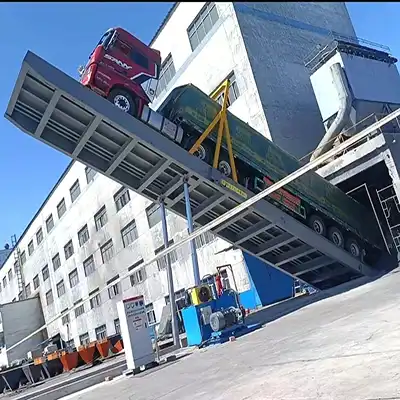
9. Truck Dumpers
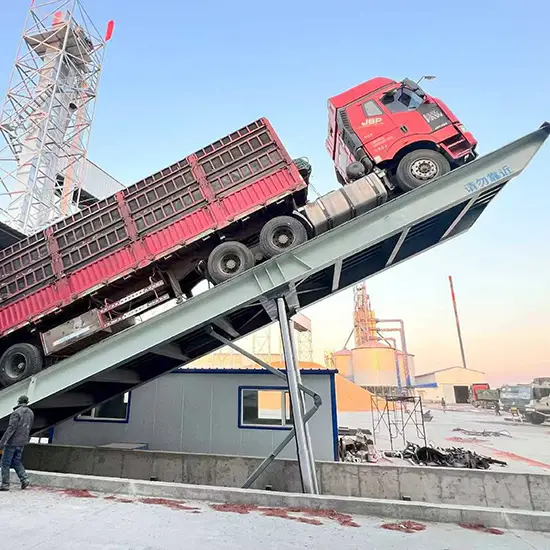
Truck dumpers hydraulically raise an entire truck to unload bulk materials rapidly.
Common Industries
- Mining
- Cement
- Biomass
- Grain
- Waste recycling
Advantages
- Fast unloading
- Minimal manual labor
- Higher throughput
- Improved safety
A truck dumper can unload a full truck in only a few minutes, significantly reducing truck waiting times.
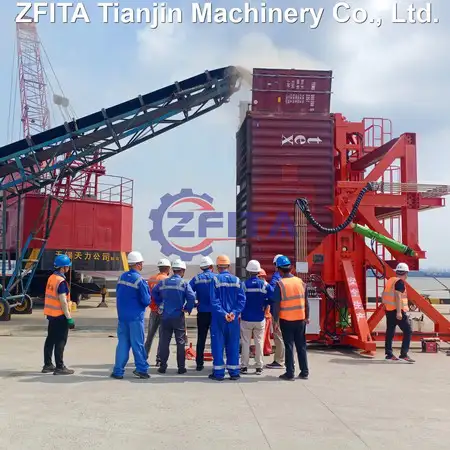
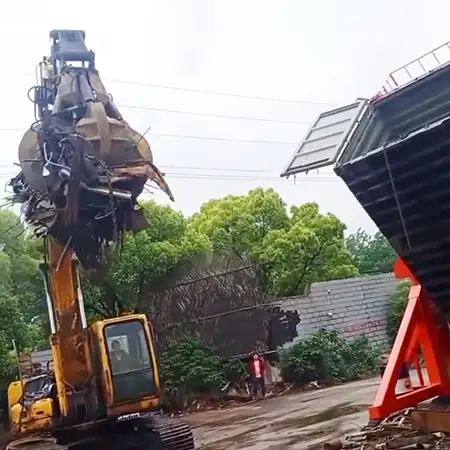
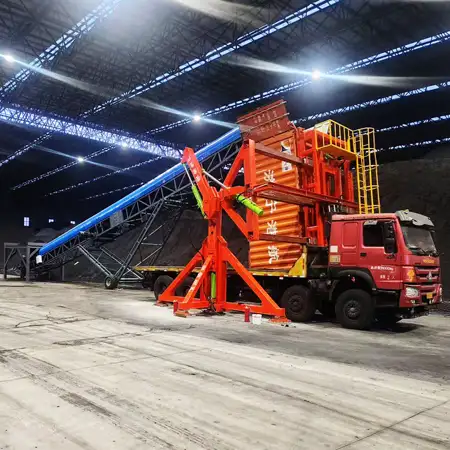
10. Container Tilters
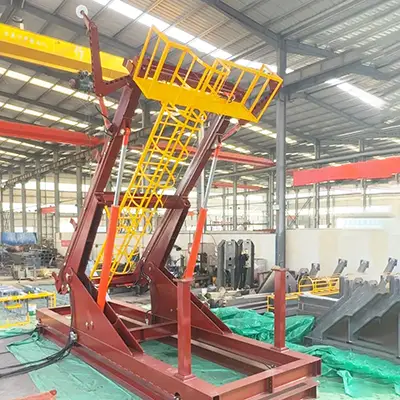
As global trade increasingly shifts toward containerized bulk cargo, container tilters have become one of the fastest-growing categories of bulk material handling equipment.
Instead of manually unloading containers, a hydraulic container tilter lifts one end of the container, allowing gravity to discharge the material.
Typical Materials
- Plastic resin
- Grain
- Fertilizer
- Scrap metal
- Salt
- Biomass
- Wood chips
- Mineral concentrates
Major Advantages
- One-person operation
- Faster unloading
- Lower labor costs
- Reduced product loss
- Optional weighing system
- Remote control
- Automatic lubrication
- Dust collection integration
Container tilters are widely used at recycling yards, ports, warehouses, grain facilities, and manufacturing plants.
11. Container Loading Systems

Efficient loading is just as important as efficient unloading.
Container loading systems typically include:
- Belt conveyors
- Telescopic conveyors
- Mobile conveyors
- Weighing systems
- Dust suppression equipment
These systems maximize container utilization while reducing loading time.
12. Bulk Storage Silos
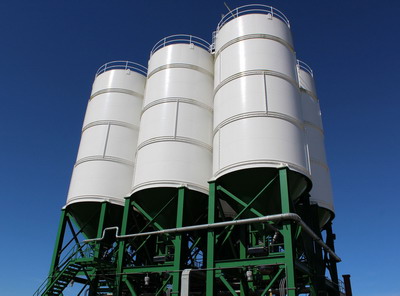
Storage silos provide temporary inventory between production stages.
Advantages
- Large storage capacity
- Weather protection
- Controlled discharge
- Reduced contamination
Silos are commonly integrated with conveyors, feeders, and automated weighing systems.
13. Dust Collection Systems
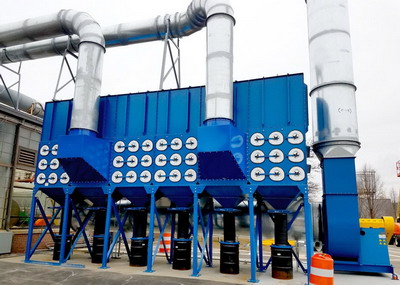
Dust control is no longer optional.
Modern facilities often require:
- Baghouse filters
- Cyclone separators
- Wet scrubbers
- Dust suppression systems
These systems improve employee safety while helping companies comply with environmental regulations.
Bulk Material Handling Equipment Comparison
| Equipment | Main Function | Best For | Typical Capacity |
|---|---|---|---|
| Belt Conveyor | Horizontal transport | Most bulk materials | Very High |
| Screw Conveyor | Enclosed conveying | Powder & pellets | Medium |
| Bucket Elevator | Vertical lifting | Grain & cement | High |
| Vibrating Feeder | Controlled feeding | Mining & aggregate | Medium |
| Apron Feeder | Heavy-duty feeding | Large rocks & ore | High |
| Stacker | Stockpile building | Ports & mines | Very High |
| Reclaimer | Stockpile recovery | Bulk terminals | Very High |
| Ship Loader | Vessel loading | Port operations | Very High |
| Truck Dumper | Truck unloading | Mining & cement | High |
| Container Tilter | Container unloading | Bulk exports/imports | High |
| Storage Silo | Material storage | Grain & cement | High |
Choosing the Right Bulk Material Handling Equipment
No single machine fits every application.
When selecting equipment, engineers should evaluate:
Material Characteristics
- Bulk density
- Moisture content
- Abrasiveness
- Particle size
- Flowability
- Temperature
Throughput Requirements
Capacity is usually measured in:
- Tons per hour (TPH)
- Cubic meters per hour
- Containers per day
- Trucks per hour
Selecting undersized equipment often creates production bottlenecks.
Facility Layout
Consider:
- Available floor space
- Existing equipment
- Expansion plans
- Truck traffic
- Rail access
- Port access
Automation Requirements
Modern systems may include:
- PLC control
- SCADA integration
- Remote monitoring
- IoT sensors
- Automatic weighing
- Predictive maintenance
Automation improves consistency while reducing labor dependence.
Environmental Compliance
Many countries now require:
- Dust suppression
- Noise reduction
- Spill prevention
- Energy-efficient operation
Selecting environmentally friendly equipment can simplify permitting and reduce long-term operating costs.
Typical Bulk Material Handling System Layouts
Mining Plant
Truck Dumper → Receiving Hopper → Apron Feeder → Crusher → Belt Conveyor → Stockpile → Stacker → Ship Loader
Grain Export Terminal
Truck → Receiving Pit → Bucket Elevator → Storage Silo → Conveyor → Container Loading System → Shipping Container
Plastic Resin Import Facility
Shipping Container → Container Tilter → Receiving Hopper → Conveyor → Storage Silo → Packaging Line
Scrap Metal Recycling Yard
Container Tilter → Receiving Hopper → Magnetic Separator → Conveyor → Stockpile → Processing Line
Future Trends in Bulk Material Handling
The industry is moving toward smarter and more sustainable operations.
Emerging technologies include:
- AI-assisted equipment monitoring
- Predictive maintenance
- Autonomous conveyors
- Remote diagnostics
- Digital twin technology
- Electric hydraulic systems
- Energy recovery systems
- Advanced dust suppression
- Real-time production analytics
These innovations reduce downtime while increasing operational efficiency.
Frequently Asked Questions
What is bulk material handling equipment?
Bulk material handling equipment includes machines used to move, store, load, unload, stack, and process loose materials such as coal, grain, ore, cement, fertilizer, biomass, and plastic pellets.
What is the most common bulk handling equipment?
Belt conveyors are the most commonly used equipment because they provide continuous, efficient transportation over long distances.
What industries use bulk material handling equipment?
Industries include mining, agriculture, ports, cement, recycling, biomass, power generation, food processing, fertilizer manufacturing, and chemical production.
What is the difference between a truck dumper and a container tilter?
A truck dumper unloads bulk materials directly from trucks by tilting the entire vehicle. A container tilter unloads ISO shipping containers by hydraulically lifting one end of the container, allowing materials to discharge by gravity.
How do I choose the right bulk handling equipment?
The best solution depends on the material being handled, required throughput, transport distance, facility layout, environmental regulations, and desired level of automation. Most industrial facilities use a combination of equipment rather than a single machine.
Conclusion
Bulk material handling equipment forms the foundation of efficient industrial logistics. From conveyors and feeders to stackers, reclaimers, truck dumpers, container tilters, and ship loaders, every machine plays a specific role in ensuring smooth material flow.
Rather than selecting equipment individually, companies achieve the greatest efficiency by designing integrated bulk handling systems tailored to their material characteristics and production goals.
As automation, digital monitoring, and environmental regulations continue to evolve, investing in modern bulk material handling equipment not only improves operational performance but also prepares facilities for the future of smart, sustainable industry.