Understanding the Equipment, Technologies, and Solutions Behind Modern Bulk Material Movement
In modern industries such as mining, agriculture, recycling, cement, ports, and manufacturing, millions of tons of bulk materials are transported and processed every day. Unlike packaged goods, bulk materials are loose materials that are handled in large quantities without individual packaging, including grain, coal, minerals, ores, biomass, fertilizer, cement, plastic resin, and scrap metal.
To move these materials efficiently from one point to another, companies rely on a Bulk Material Handling System — an integrated system of equipment, technologies, and processes designed to store, transport, load, unload, and process bulk materials safely and efficiently.
A well-designed bulk material handling system can significantly improve operational efficiency, reduce labor requirements, minimize material loss, control dust emissions, and optimize the entire supply chain.
For companies involved in global logistics and industrial production, choosing the right bulk material handling equipment and solutions is essential for reducing operating costs and increasing productivity.
What Is a Bulk Material Handling System?
A Bulk Material Handling System is a complete solution used to handle, transport, store, and process large quantities of loose materials throughout industrial operations.
Unlike unit load handling systems, which move individual products such as boxes, pallets, or containers, bulk material handling focuses on continuous movement of materials in large volumes.
A typical bulk material handling system may include:
- Conveyors
- Feeders
- Hoppers
- Storage silos
- Crushers and screens
- Loading and unloading equipment
- Truck receiving systems
- Ship loading and unloading systems
- Dust control equipment
- Weighing systems
- Automation and control systems
These components work together to create an efficient material flow from receiving to final destination.
For example, in a mining operation, a bulk material handling system may transport extracted ore from a mine site to a processing plant and then load finished products into trucks, trains, or ships.
In a grain export terminal, the system may receive grain from trucks, store it in silos, and load it into containers or vessels for international transportation.
Why Are Bulk Material Handling Systems Important?
Bulk material handling plays a critical role in industries where large quantities of materials must be moved continuously.
Without efficient handling systems, companies may face:
- High labor costs
- Slow loading and unloading operations
- Material contamination
- Excessive dust emissions
- Equipment damage
- Safety risks
- Production delays
Modern industries require faster, safer, and more environmentally friendly material handling methods.
A properly designed bulk material handling solution provides several key benefits:
1. Increased Operational Efficiency
Manual handling of bulk materials is slow and expensive. Automated equipment allows companies to move thousands of tons of material with fewer workers and shorter processing times.
For example, a container unloading system equipped with hydraulic tipping technology can unload bulk materials from shipping containers within minutes, replacing traditional manual unloading methods.
2. Reduced Labor Requirements
Labor shortages and increasing wages have encouraged industries to adopt automated material handling solutions.
Equipment such as:
- Container tilters
- Truck dumpers
- Conveyor systems
- Automated loading systems
can reduce dependence on manual labor while improving workplace safety.
3. Improved Workplace Safety
Bulk material handling often involves heavy materials, large equipment, and difficult working environments.
Modern systems are designed with:
- Remote controls
- Safety sensors
- Emergency stop systems
- Automated operation
- Protective structures
to reduce workplace accidents.
4. Better Environmental Control
Many bulk materials generate dust during loading, unloading, and transportation.
Industries such as:
- Cement
- Mining
- Grain
- Recycling
- Biomass
increasingly require dust-controlled handling solutions.
Modern bulk material handling equipment can integrate:
- Dust suppression systems
- Enclosed conveyors
- Covered transfer points
- Sealed unloading systems
to improve environmental performance.
Main Types of Bulk Material Handling Equipment
A complete bulk material handling system consists of different types of equipment designed for specific operations.
Conveyor Systems
Conveyors are among the most common types of bulk material handling equipment.
They are used to continuously transport materials over short or long distances.
Common conveyor types include:
- Belt conveyors
- Screw conveyors
- Chain conveyors
- Bucket elevators
- Mobile conveyors
Applications include:
- Mining operations
- Grain terminals
- Cement plants
- Recycling facilities
- Ports
Conveyor systems provide reliable and continuous material transportation while reducing manual handling.
Bulk Material Loading and Unloading Equipment
Loading and unloading are critical steps in global supply chains.
For containerized bulk materials, traditional unloading methods often require workers to enter containers and manually remove materials, creating problems such as:
- High labor costs
- Long unloading times
- Safety risks
- Dust exposure
Advanced bulk material unloading systems provide faster and safer alternatives.
Container Tilter and Container Flipper Systems
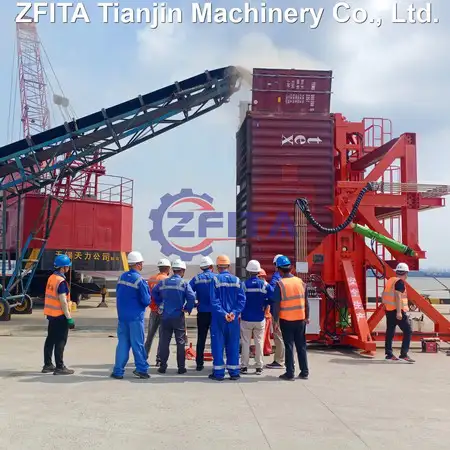
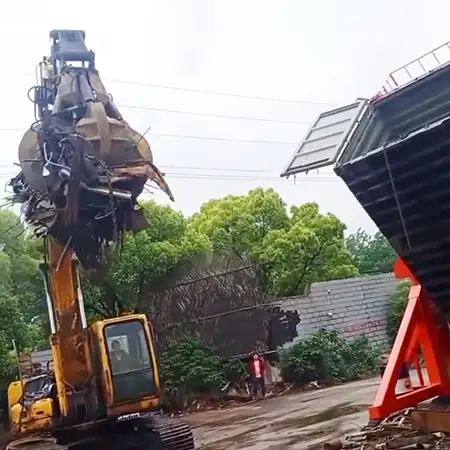
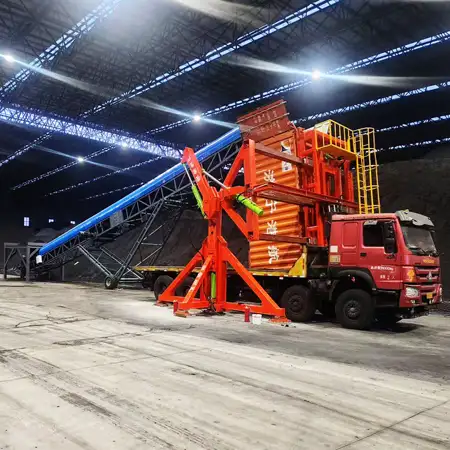
A container tilter is a hydraulic bulk material unloading machine designed to lift and rotate shipping containers, allowing gravity to discharge loose materials.
Common applications include:
- Plastic resin unloading
- Grain unloading
- Scrap metal unloading
- Agricultural products
- Mineral materials
Advantages include:
- Faster unloading cycles
- Reduced labor requirements
- Improved safety
- Better dust control
- Lower operating costs
For industries handling large volumes of containerized bulk materials, container tilting technology provides an efficient alternative to traditional unloading methods.
Truck Dumper Systems
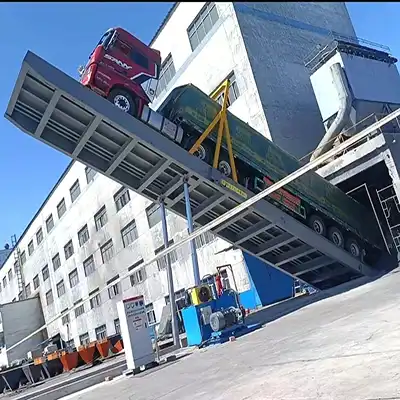
A truck dumper or truck tipping platform is designed to unload bulk materials from trucks by lifting and tilting the entire vehicle.
Typical applications include:
- Coal
- Grain
- Sand
- Minerals
- Construction materials
Truck dumper systems are widely used in:
- Mining sites
- Power plants
- Ports
- Agricultural terminals
They allow rapid unloading while minimizing vehicle waiting time.
Bulk Material Handling Systems in Different Industries
Different industries require different bulk material handling solutions depending on material characteristics, transportation methods, and production requirements.
Mining Industry
Mining is one of the largest users of bulk material handling systems.
Materials such as:
- Iron ore
- Copper ore
- Lithium minerals
- Nickel ore
- Coal
must be transported from extraction sites to processing facilities and export terminals.
Mining bulk handling systems typically include:
- Heavy-duty conveyors
- Crushers
- Stockpile systems
- Truck loading systems
- Ship loading equipment
As demand for battery minerals continues to increase, efficient handling of lithium, nickel, and copper resources has become increasingly important.
Grain and Agricultural Industry
The global grain supply chain depends heavily on reliable bulk material handling equipment.
Common materials include:
- Wheat
- Corn
- Soybeans
- Rice
- Animal feed
Grain handling systems are used for:
- Truck receiving
- Storage
- Container loading
- Vessel loading
- Export operations
Efficient grain handling reduces product loss and improves export competitiveness.
Recycling and Scrap Metal Industry
Recycling facilities handle large volumes of materials every day.
Examples include:
- Ferrous scrap
- Aluminum scrap
- Copper scrap
- Recycled plastics
Because scrap materials are often irregular in shape and heavy, specialized bulk handling equipment is required.
Container unloading systems and tipping equipment can significantly improve scrap export efficiency.
Cement and Construction Materials
Cement, limestone, sand, and aggregates require continuous movement throughout production facilities.
Bulk handling systems help manage:
- Raw material receiving
- Storage
- Processing
- Packaging
- Shipping
Dust control is especially important in cement-related applications due to strict environmental requirements.
Key Factors When Designing a Bulk Material Handling System
Selecting the correct system requires careful consideration of several factors.
Material Characteristics
Different materials behave differently.
Important factors include:
- Density
- Particle size
- Moisture content
- Flowability
- Abrasiveness
- Temperature
For example, grain requires gentle handling, while mining materials require heavy-duty equipment.
Transportation Method
The handling system must match the transportation method:
- Trucks
- Railcars
- Containers
- Ships
Containerized bulk materials require different solutions compared with traditional conveyor-based operations.
Required Capacity
System design depends on:
- Tons per hour
- Daily production volume
- Loading frequency
- Storage requirements
A high-capacity operation requires equipment designed for continuous heavy-duty operation.
Automation Level
Modern facilities increasingly use:
- Remote monitoring
- PLC control systems
- Automated weighing
- Data collection
Automation improves productivity and reduces human error.
The Future of Bulk Material Handling Systems
The future of bulk material handling is moving toward smarter, cleaner, and more automated solutions.
Key trends include:
Digitalization
Industrial companies are adopting:
- Smart sensors
- IoT monitoring
- Predictive maintenance
- Automated control systems
These technologies help reduce downtime and improve equipment reliability.
Sustainable Material Handling
Environmental regulations are pushing companies toward cleaner handling methods.
Future systems will focus on:
- Lower energy consumption
- Reduced dust emissions
- Electric-powered equipment
- Improved resource efficiency
Flexible Modular Solutions
Modern supply chains require flexibility.
Mobile and semi-mobile bulk material handling equipment allows companies to quickly adapt to changing production and logistics requirements.
Choosing the Right Bulk Material Handling Solution Partner
A successful bulk material handling project requires more than individual machines. It requires a complete understanding of:
- Material characteristics
- Industry requirements
- Logistics processes
- Safety standards
- Environmental regulations
A professional bulk material handling solutions provider can help companies design systems that improve efficiency, reduce costs, and support long-term growth.
ZFITA focuses on providing customized bulk material handling solutions for industries including mining, grain, recycling, biomass, cement, and port operations.
Our solutions include:
- Container unloading systems
- Container tilters
- Truck dumpers
- Truck weighing systems
- Customized bulk handling equipment
By combining engineering expertise with practical industrial experience, ZFITA helps global customers optimize their material handling operations.
Conclusion
A Bulk Material Handling System is the foundation of efficient industrial material movement.
From mining and agriculture to recycling and global logistics, these systems help companies transport, unload, and process massive quantities of bulk materials safely and efficiently.
As industries continue to demand higher productivity, lower operating costs, and more sustainable operations, advanced bulk material handling equipment and solutions will play an increasingly important role in global supply chains.
Choosing the right technology and the right engineering partner is the key to building a reliable and future-ready bulk material handling system.